


The Forgotten Sigil is a narrative-driven fantasy puzzle game where players explore an ancient underground world through rune-based mechanics and immersive audio design.
Role: Sound Designer, Composer, Audio Implementer, Game Development Engine: Unreal Engine + Wwise Focus:Interactive audio, environmental storytelling

Game Overview
Fernvale is a peaceful kingdom, ruled by a wise and kind King and his beloved Queen. For centuries, the realm has lived in harmony under the protection of a chosen Guardian, a powerful individual selected to maintain balance and safeguard the kingdom’s ancient magic...
The Guardian is chosen by the ancient talisman of time, which only begins to glow when it recognises its next bearer. With each generation, a new protector is reborn, destined to defend the kingdom and preserve its fragile balance.
Beneath Fernvale lies a forgotten world, buried deep below the surface, a hidden network of ancient caves and ruins where powerful runes and portals connect lost spaces. As this system begins to shift, the safety of the realm becomes uncertain.
Players follow Hera and Nyx as they journey into this hidden world, navigating its ancient mechanisms and uncovering the secrets it holds. Their path is shaped by trust, ambition, and the delicate balance between loyalty and betrayal.
The audio design of The Forgotten Sigil focuses on immersion, atmosphere, and emotional storytelling through sound.
Audio is used not only to build the world, but to guide the player through both the environment and the narrative, blending natural ambiences, musical elements, and interactive feedback into a cohesive sonic experience.
Audio Design
Ambience & Environment
Layers of echoing cave hums, wind, water, and magical textures were used to create a strong sense of atmosphere and immersion throughout the game world. I wanted each environment to feel emotionally connected to the player, using subtle environmental detail to build depth, scale, and space within the caves.
After experimenting with standard convolution reverbs, I wasn’t completely happy with how the environments were sounding, so I began researching impulse responses and convolution reverb in more depth. Using the OpenAIR Library from the University of York, I downloaded several impulse responses to experiment with realistic environmental acoustics. One of the reverbs I used was recorded from the dome of St Paul’s Cathedral, which helped create a much larger and more realistic sense of space as sounds reflected naturally throughout the environment. This dramatically transformed the atmosphere and immersion within the game.
I also explored spatial audio within a 3D environment, positioning sounds in relation to the player so that audio shifted naturally depending on placement and movement throughout the world.
Music
The music in The Forgotten Sigil was designed to guide the player emotionally through different areas of the game, helping shape atmosphere, tension, and discovery throughout the player’s journey.
I created an original composition which I felt sat naturally within the universe and atmosphere of the game. As development progressed, I ended up cutting sections of the composition apart and triggering different musical moments within certain areas of the cave and during specific gameplay moments. This approach ended up working fairly well and helped give different spaces within the environment their own identity.
However, in hindsight, I think I would have approached the implementation differently by creating shorter loopable musical sections that could blend and transition into one another more naturally. I feel this would have created a cleaner workflow and a more adaptive music system overall, but at the time my main focus was on giving each part of the environment its own distinct atmosphere.
I also experimented with music ducking systems so that the soundtrack would subtly lower in volume when dialogue was playing, helping important narrative moments remain clear and focused during gameplay.
Both diegetic and non-diegetic dialogue were explored throughout the project, particularly when distinguishing between internal monologue and conversations between the main character and the NPC companion. I adjusted the reverb and spatial processing depending on the scene so the dialogue felt grounded within different environments and emotional spaces.
Magic & Interaction
A large part of the sound design process involved experimenting with layered audio to create magical interactions, including portals, spells, and crystal hums. This became one of the most enjoyable aspects of the project, as it allowed me to explore more abstract and creative approaches to sound design and sonic world building.
I combined processed vocal layers, tonal textures, low frequency design, and manipulated environmental recordings to create magical sounds that felt immersive and responsive within gameplay.
Character Audio
I recorded a range of vocal utterances and reactions to help make the gameplay feel more immersive while also strengthening the emotional connection to the characters and narrative. Character audio was used to reinforce immersion and narrative progression throughout the game, helping guide the player through emotional shifts and gameplay moments as the characters explored the environment together.
I also created a material-based terrain switch system for both the player and NPC companion so that footsteps would respond dynamically to different surfaces within the game world. Using Blueprint systems in Unreal Engine, I connected raycast detection to Wwise switch states, allowing the audio to change depending on the terrain being walked on. Physical materials were assigned throughout the environment to ensure the footstep sounds responded accurately to different surfaces.
Additional reverb and environmental processing were applied to help the footsteps sit naturally within the space. Getting the NPC footsteps to sound correct became quite challenging, as the companion often moved behind the player and would sometimes sound unintentionally louder due to camera positioning and proximity. To improve clarity during gameplay, I adjusted the NPC footstep levels to sit slightly quieter within the mix. Although not perfect, this created a much more balanced and immersive experience overall.
I also experimented with wet and dry reverb settings depending on the environment and area of the level, helping different spaces feel more realistic and distinct throughout the game.
Process
Most of the sound design within The Forgotten Sigil was created using original recordings, vocal performances, and experimental sound manipulation. In some areas, library audio was layered into the designs to help add additional texture and depth where recordings were not possible.
Throughout the project, I documented my workflow, implementation process, technical experimentation, and development journey across both Unreal Engine and Wwise, reflecting on the challenges, problem solving, and creative discoveries made throughout production.


A selection of sound design experimentation and Wwise implementation work exploring atmosphere, interaction, and immersive gameplay audio.


The Forgotten Sigil became a significant learning experience, introducing me to both Wwise and Unreal Engine for the first time. Throughout the project, I explored how interactive audio connects to gameplay, environment design, and player immersion through practical implementation and experimentation.
During development, the original game build encountered a major scaling issue, which required me to restart the project from scratch. Although challenging, this process strengthened my ability to troubleshoot, rebuild systems, and adapt workflows throughout development. More detail on this process can be found in my development blogs.
Using a pre-made environment as a foundation, I focused on developing gameplay systems and implementing audio through Blueprint workflows. I received valuable technical support from developer Sam Sturtivant, who assisted with Blueprint development and provided guidance on Unreal Engine workflows and audio implementation. This support helped deepen my understanding of how interactive systems function within a game environment and enabled me to progress the project to completion.
Over time, I developed a stronger understanding of Wwise integration, environmental audio design, gameplay interaction, and world building within Unreal Engine. As these systems began to come together, the process became increasingly rewarding, allowing me to focus more on creative decision-making and refining the overall player experience.
However, due to the setback earlier in development, I had less time to focus on the production and polishing stages of the project. This is an area I am keen to continue developing and refining in future work.
Key Features
Wwise integrated with Unreal Engine using events and soundbank
Interactive footstep system using material-based terrain detection
Blueprint systems connecting audio to gameplay interaction
Ambient audio system combining looping beds and positioned emitters
Dynamic environmental audio responding to player movement and space
Portal and magic sound design implemented within gameplay sequences
Companion NPC audio and movement interaction systems
Development Blog
For more detail about how I created this project, see my blog series “My First Game Dev Journey.”


Implementation & World Building

Voice acting plays an important role in world building and emotional storytelling within games, so it felt important to include dialogue in The Forgotten Sigil, especially as the project is heavily narrative-driven. The dialogue helps establish the tone of the world, bring the characters to life, and deepen the player’s connection to their journey.
I worked closely with voice actor and friend Grace Jukes to develop the characters of Hera and Nyx, shaping their personalities, emotional range, and relationship through performance. Grace also performed the narration heard at the beginning of the game, helping to introduce the world and atmosphere of Fernvale.
Alongside directing and editing the dialogue, I also performed the voice of Hera, allowing me to engage with both the creative and technical sides of the process. This project became my first real experience working extensively with dialogue editing, including cleaning and shaping recordings, integrating them into the
environment, and ensuring they felt natural and immersive within the game world.
Through this process, I gained a much stronger understanding of performance direction, dialogue integration, and how voice can contribute to atmosphere, storytelling, and player immersion within an interactive space.
Dialogue & Character Audio
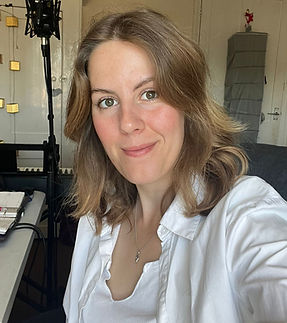
Voice Actor - Nyx & Narrator

Isis Medlow
Voice Actor, Dialogue Editor & Voice Direction -Hera
Creative Bible & Development Document
The Game Bible for The Forgotten Sigil documents the creative vision, narrative design, and audio direction behind the project.
It explores the world of Fernvale, character development, environmental design, and the role of sound in shaping the player experience. This document reflects both the conceptual and technical foundations of the project.
Reflection
The Forgotten Sigil was a project I set for myself to explore the fundamentals of audio implementation and develop a deeper understanding of game development. Through this process, I developed my skills across sound design, composition, dialogue editing, and interactive audio, while also learning how to integrate audio within Unreal Engine using Wwise.
One of the most valuable aspects of this project was understanding how audio functions within a game environment. Rather than existing in isolation, sound needed to respond to player interaction, environment, and narrative. This shifted my approach from creating standalone audio to designing systems that support immersion and storytelling.
Working with voice acting also introduced me to a new area of practice. Collaborating with voice actor Grace Jukes, as well as performing the voice of Hera myself, allowed me to explore both direction and performance. This gave me a deeper appreciation for how dialogue shapes character identity and emotional connection within a game.
While this project provided a strong foundation, it also highlighted areas for further development, particularly in refining implementation workflows and expanding my technical understanding of middleware and game engines. Moving forward, I aim to continue developing these skills and apply them to more complex and fully realised interactive experiences.
Although there were challenges throughout the process, and aspects that I would continue to refine, this project has been an important step in my learning journey, helping me build a strong foundation in game audio and audio implementation.
Overall, The Forgotten Sigil marks an important step in my development as a game audio practitioner, establishing a foundation that I will continue to build upon in future projects. With further development, I hope to continue expanding this project and potentially bring it to release in the future.